 Skip to content

The questions I believe are worth asking before you invest in your training—and your next chapter.
Over the years, I have had thousands of conversations with people considering careers as Tour Directors or Tour Guides.
Some arrive knowing exactly what they want to do. Others begin with somethOn-the-Road Experienceing as simple as:
“I love to travel. I love people. And I keep wondering if there might be something more I could do with that.”
Then come the questions.
What kind of training do I need? Can I do it online? Do I need real-world experience? How do I know which program is right for me? Will someone help me find work?
And perhaps the biggest question of all: Can I really do this?
I understand why choosing a training program can feel overwhelming. Search online, and you’ll find different programs, different formats, different prices, and plenty of promises. Of course, after 50 years of preparing people for careers in travel, I could simply tell you why I believe in ITMI.
But I’d rather help you ask the questions I would want you to ask of any professional Tour Director or Tour Guide training program — including ours.
Because you’re not simply choosing a course. You’re choosing the people you will trust to help prepare you for what comes next. And eventually, you will be responsible for someone else’s journey. That deserves more thought than comparing course descriptions and price tags
Start With the Career, Not the Course
Before comparing programs, think about what you’re hoping this next chapter might look like. Do you want to guide visitors through your hometown or region? Would you like to travel with a group for several days or weeks as their Tour Director? Are you looking for a full-time career, seasonal work, a second career, or something meaningful that fits into the life you already have?
Maybe you don’t know yet. That’s perfectly okay.
John came to ITMI with a straightforward idea: he wanted to travel and get paid to do it. He searched for opportunities, applied to different tour companies, and eventually found ITMI. John completed the application, downloaded our information, and we ended up talking on Zoom.
Later, he told me: “The fact that a president of a company took the time to speak with me and not some HR person said volumes.”
I smiled when I read that. To me, it was simply a conversation. I wanted to know who John was. Why was he considering this? What had he done before? What was he hoping this next chapter might become? And that brings me to one of the first questions I would ask any training organization:
Before I Enroll, Will Anyone Actually Talk With Me?
This matters to me. A career decision — especially one involving a significant investment of time and money — deserves more than a checkout button. Before someone joins ITMI, we ask them to apply.
Not because we’re trying to make entry difficult. Because we want to hear their story. What brought you here? Why now? What experience are you bringing with you? What kind of work are you hoping to do? What excites you? What are you uncertain about?
Then we spend some time getting to know you even better. That conversation helps us understand your goals — and it gives you an opportunity to decide whether our training is truly the right fit for yours.
So when you’re comparing programs, ask yourself: Am I simply signing up for a course, or is someone taking the time to understand why I’m here?
I think that distinction matters.
A Tour Director or Tour Guide does much more than stand in front of a group with a microphone. The work may take place aboard a motorcoach, on a cruise ship, on a train, walking through a city, or almost anywhere travelers gather. There are itineraries to understand, hotels and suppliers to confirm, timing to manage, drivers and other travel professionals to work alongside, guests to care for, stories to tell, and countless decisions happening behind the scenes.
And then there are the people. John described what happened when the training met reality:
“40 strangers with 40 personalities.” That’s Tour Directing. That’s Tour Guiding.
Knowing the itinerary matters. Knowing how to understand the people traveling that itinerary matters just as much. Professional training should prepare you not only for logistics and operations but also for communication, group dynamics, traveler psychology, guest care, storytelling, cultural awareness, problem-solving, professionalism, and the unexpected.
David came to ITMI from a very different starting point. For more than 30 years, he had led trips with church members, music groups, Scouts, and students. He already knew how to organize groups, communicate, tell stories, solve problems, and adapt when things changed.
What he wanted was a professional framework. He described it this way: “I was looking for a way to take all of that experience and put it into a professional framework.”
I’ve seen that many times over the years. People sometimes arrive thinking they’re starting over.
They’re not.
A Tour Guide may have been doing this work successfully for years on her own, but never had professional training, mentorship, or a community behind her. A teacher may already understand group dynamics. A project manager may already know how to juggle dozens of moving pieces. A parent may have spent years anticipating needs and solving problems before anyone else even noticed them. A performer may already know how to read an audience. A hospitality professional may already know how to make someone feel welcome. A good training program should help you recognize those strengths — and then teach you how to apply them professionally to Tour Directing or Guiding.
Ask: Will Someone Know Me Once I’m in the Program?
Online education has opened wonderful doors. People can train while they’re still working, caring for family, or living thousands of miles away. But online should not have to mean alone.
Ask what happens after you enroll. Will you have an instructor? Can you ask questions? Will someone watch you practice? Will you receive personal feedback or are you one of many? Will anyone understand the areas where you’re confident and the places where you’re still finding your footing?
Nars came to Tour Directing during a planned career break after years in corporate program management. She had moved to the United States from Taiwan in her thirties, studied intercultural relations in graduate school, and spent years planning travel for family and friends. Nars wasn’t simply looking for another online course. She was wondering whether something that had always been part of her life—travel and connecting people across cultures—could become the work itself.
John arrived with a different story. David arrived with decades of leadership experience. Another student might arrive after retirement. Another after raising a family. Another at 25, already knowing travel is where they belong.
Professional training should leave room for the person you already are while helping you become the professional you want to be.
Ask: Will I Practice What I’m Learning?
You can read about giving commentary. You can study guest psychology. You can learn how to prepare a daily briefing, manage timing, handle a hotel arrival, work with a driver, or respond when something changes. But eventually, you have to do some of it.
Professional confidence isn’t built simply by watching another video or passing another quiz. It comes from practice. So, ask how the training moves students from knowing to doing.
Look for opportunities such as live presentations, assignments, communication practice, problem-solving, role play, and meaningful feedback. You don’t need to be perfect while you’re learning.
In fact, that’s the point. Training should give you a place to try, make adjustments, build confidence, and find your own voice before you’re responsible for an entire group of travelers.
Ask: Can I See What Happens on a Real Tour?
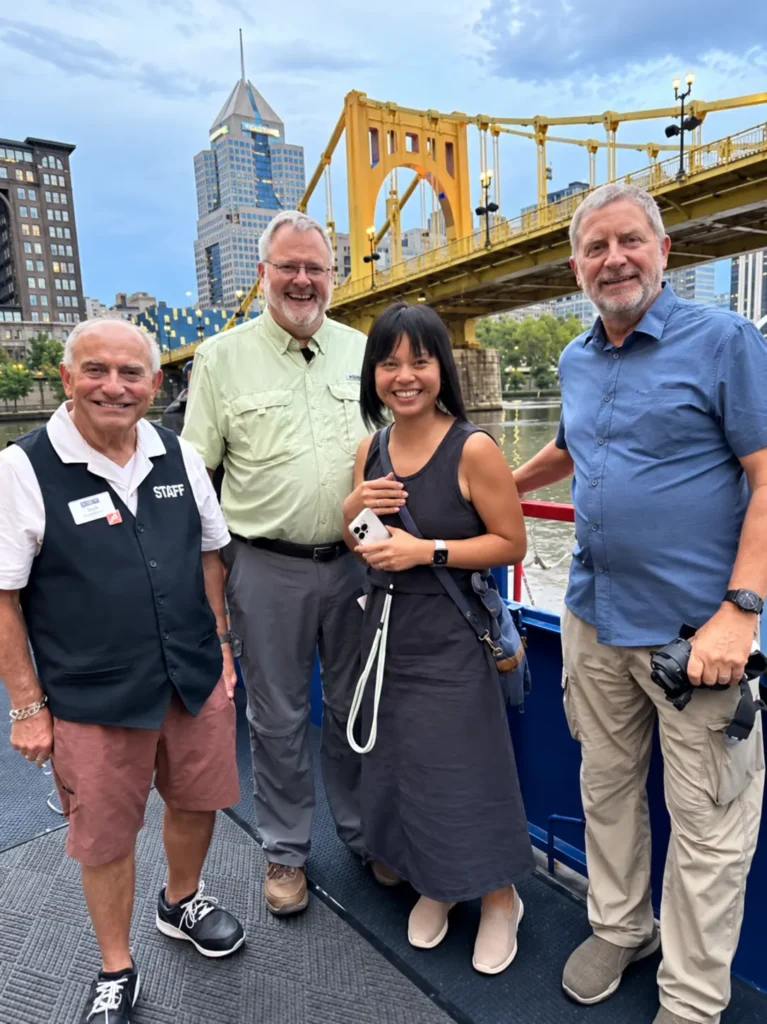
If a program offers field or in-person training, don’t stop at the words. Ask what the experience actually means.
Is it a simulation? A classroom exercise? A practicum? A training trip? A live operating tour? Are there actual guests? Will you only observe, or will there be opportunities to interact and assist? What are you expected to learn while you’re there?
John knew from the beginning that he wanted ITMI’s On-the-Road Experience. His reasoning was simple: “You learn by doing.”
For Nars, being on the road gave her another realization. She discovered that the training wasn’t a script she was expected to copy exactly. Nars described everything she’d learned as a toolbox. Watching a professional Tour Director with his own style helped her recognize which tools she might use, which she might use differently, and where her own personality would become part of the job. Observing a step-on Tour Guide in one of the cities even gave her ideas she could take home and use in Boston.
Nars told me: “The ITMI toolkit isn’t a checklist every Tour Director follows the same way. It’s a set of choices, and some of them will be mine to make differently.”
I think that’s exactly what real-world learning should do.
Training gives you the tools. Experience begins teaching you when and how to use them.
Ask: Does the Training Prepare Me for People — or Just Logistics?
If you have read much of what I have written over the years, you probably know how strongly I feel about this. Tours don’t happen to itineraries.
They happen to people. People get tired. People get excited. Someone moves more slowly than the rest of the group. Someone asks the same question three times. Someone wants every detail. Another simply wants to look out the window. Someone is nervous. Someone needs reassurance. And sometimes, someone simply needs to know that you noticed them.
Nars explained what happens to people beautifully, and recently shared five words with me that I haven’t been able to get out of my mind.
During her On-the-Road Experience, she noticed a guest sitting on low steps and wondered whether the woman might have difficulty getting back up. Nars checked on her, went about what she needed to do, and then came back.
The guest looked at her and said: “You came back for me.” When I read that, I thought: There it is. No grand gesture. No complicated procedure. Nars noticed someone. She remembered her. And she came back.
That’s hospitality. That is also why professional Tour Director and Tour Guide training has to go beyond logistics. We can teach an itinerary. But professional training must also teach you how to lead the people living it..
Ask: What Will I Learn to Do When Things Don’t Go According to Plan?
Because eventually, they won’t. Traffic happens. Weather happens. Rooms aren’t ready. An attraction changes something. A meal needs adjusting. A guest isn’t where you expected them to be. Every experienced Tour Director could add dozens more.
Professional training shouldn’t only show you what to do when everything works. It should teach you how to think when it doesn’t.
David noticed this especially when he went on the road. As a guest, you see the finished product. You board the motorcoach. You visit the attraction. You have lunch. You check into the hotel. Behind that experience, the Tour Director is constantly thinking about timing, traffic, transportation, meals, hotels, attractions, guests, the driver, and whatever comes next.
Sometimes several things change at once. David particularly noticed the relationship between the Tour Director and the driver — and how important communication, trust, and calm can be.
I liked the way he described what the guests need to feel: “We’ve got this. We’re moving forward.”
Exactly.
Your guests don’t need to experience every problem you’re solving behind the scenes. They need to trust that you can solve it.
Ask: What Happens After the Training Ends?
This is one I don’t think people ask often enough. Certification should be a beginning, not an ending. What happens when the coursework is finished? Will someone help you understand how to present yourself professionally? Will you receive guidance on your résumé, interviews, professional introduction, or understanding how independent-contractor work operates? Will you learn how Tour Operators hire? Will you receive job leads? Will you remain part of a professional community?
And perhaps the bigger question:
Does the organization stay interested in you after you’ve completed the course? A certificate can demonstrate that you completed training. A career requires knowing what to do next.
Ask: Who Is Teaching Me — and Are They Still Connected to the Industry?
Look beyond the program’s name. Who developed the training? Who teaches it? What experience do they bring? Are they connected to today’s industry? Does the organization maintain relationships with Tour Operators, destinations, industry associations, and working travel professionals? And does the curriculum evolve? Because travel certainly does.
Technology changes. Travelers change. Communication changes. Expectations change. The industry changes.
Professional education should continue changing with it.
And Yes, Ask About Price
Of course, cost matters. Professional training is a significant investment for most people. Compare prices. But make sure you’re comparing the same things.
Ask what is included. Ask what costs extra. Ask how much personal instructor access you receive. Ask whether joining the live practice includes flight, accommodations, or meals. If field or in-person training is offered, ask exactly what is included. Are transportation, accommodations, meals, or other expenses additional? And most importantly, what will you actually experience and practice? Ask what happens after you graduate. Ask whether there are additional opportunities you can add later.
The least expensive option isn’t automatically the best value. Neither is the most expensive.
The better question is: What do I need to become ready for the work I want to do — and does this program provide it?
Perhaps the Most Important Question: Can I See Myself Doing This?

Training can teach you what the job requires. Sometimes experience tells you whether the job is yours.
John’s confirmation came during a guest interaction. He noticed one guest becoming irritated with another guest who was asking questions during an attraction. Rather than ignoring it, John recognized what was happening. He thought about what he’d learned about different personalities, approached the guest with a smile, listened, and helped her see the situation differently.
The interaction changed. So did their relationship. John thought: I really can do this. For Nars, it was:“You came back for me.” And then something happened at the end of the tour that she hadn’t expected.
In previous workplaces she had loved, saying goodbye eventually meant the connection faded. On tour, guests kept asking where she was going next. Because they wanted to come with her. She described it beautifully: “It’s never a real goodbye. It’s a ‘till next time.’”
And then she gave me one of my favorite observations about the difference between studying this profession and experiencing it: “The online training tells you what the job is. The road tells you whether it’s yours.”
David’s confirmation was different again. He didn’t need someone to tell him he could lead people. He had been doing that for decades. What he gained was the professional Tour Director framework to go with what experience had already taught him.
His advice? “Take the step.” Three students. Three very different backgrounds. Three different ways of knowing they were ready. And if we asked another hundred Tour Directors, I’m sure we’d hear another hundred stories.
So, How Would I Choose?
If you called me tomorrow and asked: “Joan, how do I know which Tour Director or Tour Guide training program is right for me?” I wouldn’t begin by telling you to choose ITMI. I’d tell you to ask questions.
I’d begin by asking about you. What brought you here? Why now? What are your goals? What are you dreaming about? Because choosing a new direction involves change and transition, whether you’re 20 or 75.
Then I’d tell you to ask questions.
Ask what you’re really going to learn. Ask whether someone genuinely wants to know who you are and help you succeed—or whether anyone can simply pay and enroll. Ask who will know your name once you’re a student. Ask whether you’ll have opportunities to practice. Ask whether the training prepares you for both people and logistics. Ask who’s teaching you and whether they’re still connected to today’s industry. Ask what happens after the coursework ends. And ask whether you’ll have an opportunity to experience the profession in the real world.
And yes, ask about the price.
But also ask what you’re receiving for that investment.
Then listen carefully to the answers. And listen to yourself.
I’ve been part of the travel industry for a long time. My own road began at a hotel front desk and took me through management and operations, hotel and cruise sales, life as an officer aboard a cruise ship, Tour Directing, and eventually to where I am today.
After all these years, one of the things I value most is still hearing the stories of the people who inquire about or apply to ITMI.
Because I believe wholeheartedly in the power of travel and human connection.
We’re preparing people for something much bigger than running an itinerary. Tour Directors and Tour Guides have the opportunity to become ambassadors of goodwill—helping travelers better understand people, cultures, traditions, destinations, and the world we share.
Technology has certainly changed. Travelers have changed. And the way we deliver training has changed dramatically since ITMI began in 1976.
But one thing hasn’t. At the other end of every itinerary is a person trusting you with part of their journey.
Whatever training program you choose, choose one that prepares you to be worthy of that trust. And if that road leads you to ITMI, I’d love to hear your story.
A Moment to Reflect
Maybe you’re not ready to compare training programs yet. Maybe you’re still asking the question that comes before all of this:
What could my next chapter actually look like? That’s a perfectly good place to begin.
Think about?
What brings me alive?
What am I naturally good at?
How do I want to make a difference?
And perhaps…
What if my love of travel—and some of the qualities already within me—could become part of something I never imagined doing?
Sometimes the next chapter doesn’t begin with knowing exactly where you’re going. Sometimes it begins by recognizing what has been inside you all along.
Still Exploring Where Travel Could Take You? You don’t have to have your next chapter figured out before you begin exploring it.
Could Travel Be More Than a Passion?
Our 5-Minute Career Reflection Guide was created to help you slow down for a few minutes and look at the experiences, strengths, interests, and qualities already within you.
Not to tell you what you should do. Simply to help you wonder what might be possible.
EXPLORE THE 5-MINUTE CAREER REFLECTION GUIDE
Tour Directing Is Only One Road
The travel and tourism industry is much larger than most people realize.
Our 75 Careers in Travel guide explores career possibilities throughout the industry — some you probably know and others you may never have considered.
If you know you love travel but aren’t yet sure where you belong within it, start exploring. You may discover a career you didn’t know existed.
Think Tour Directing Might Be Your Road?
If something in this article sounded a little like you, explore ITMI’s professional Tour Director & Tour Guide training, including different certification pathways and opportunities to take what you’ve learned online onto the road.
EXPLORE TOUR DIRECTOR & GUIDE TRAINING
Or perhaps you’re not ready for that yet.
That’s okay, too.
Tell us where you’ve been. What you’re thinking about. What you hope this next chapter might become.
Sometimes a conversation is the best place to begin.
TELL US YOUR STORY
Related Reading
The Traveler’s Shoes
What the shoes beside us can teach us about the people we lead.
